Japan was everything I expected and had heard about. This post is based on my observations of the place and its people. In all my travels around the globe, there is no denying that Japan ranks the highest as far as politeness and courtesy is concerned. This country has the most courteous of people I have ever come across. Everything is endearing about the culture from their bowing in politeness to their greeting of each other to their ever pleasant smiles. Anywhere you go each person is acknowledged and greeted separately making the good old American greeting of ‘Hi Guys’ or ‘Hi All’ seemingly impersonal. The fact that waiters and cooks scream out ‘Ohayo’ in restaurants when you enter and exit the restaurant brings a smile out. How can one ignore being acknowledged and welcomed with such gusto and enthusiasm?
Food is an integral part of the Japanese culture or should I say Japan has a culture of food. After all Japan gave the world “The Iron Chef”!! In a country that touts healthy living and highest longevity, food is an obsession. Every train station, bus station, airport and market is packed with restaurants and eateries. The obsession is obvious and you cannot miss it. The effort and time taken to select the best ingredients, to cooking the food to perfection and the presentation of it is mind blowing.
I have seen enough of Food Network shows and Iron Chef to know that the Japanese take immense pride in their food. Just the name Masaharu Morimoto brings about images of an intense, passionate chef and exotic foods carefully selected, deliciously cooked and beautifully presented. Whether it is meant for take-out or dining in, food is a work of art and beautifully packaged and the quality is given more importance than quantity. Japan is an expensive place but as far as food is concerned it is definitely worth every dime or yen for that matter.
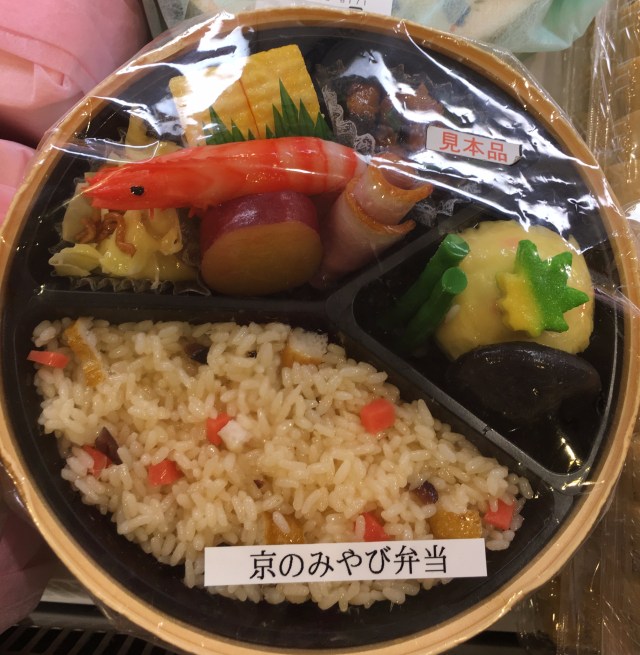

In our gastronomical journey through Japan we tried several foods. I am probably the least experimental and most picky out of the family lot. However my kids were born without the omnivore’s paradox and they had a fabulous time tasting and trying. My boys were raised consciously to try everything and eat everything and believe me they do! While other parents would be telling their kids to “try new foods” or “eat something”, I would be telling mine to be careful and make sure it is food before you put it in your mouth. They would be at the 711 early in the morning eating Chicken Katsu every day in Japan and I finally got over my hang-up of eating food from a 711 and tried it. I had to agree begrudgingly that it was good. I know I have a lot of work to do to get over my yuppie “registered dietitian will not eat from fast-food joints” attitude. But to my surprise the 711’s in Japan offered a wide choice of fresh fruits, yogurt parfaits, sweet breads, breakfast foods to traditional Japanese foods.
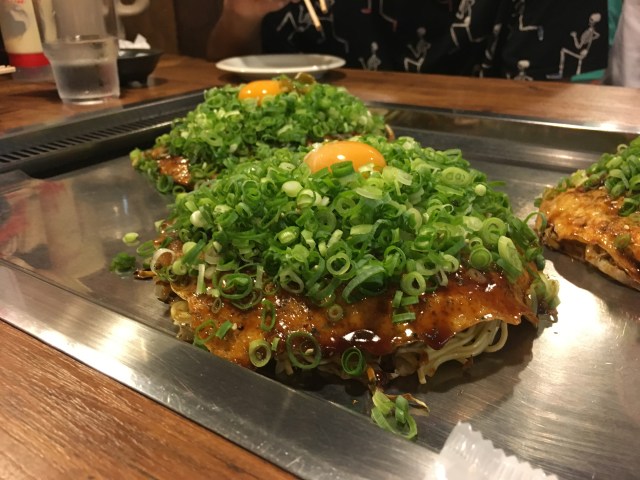
In my limited experience, the best dish I tasted and loved was in Hiroshima. You cannot leave Hiroshima without trying the Okonomiyaki! We went to a restaurant called Nagata-Ya as it was rated very high on Yelp. There was a wait as predicted and we waited patiently in a line outside the restaurant of course. Everyone in Japan waits in line and definitely for some good food. In the line, we were given the menu to look at and there were several choices for the Okonomiyaki from original to oyster. I chose garlic and the boys chose between original and special. By the time we were seated, we were hungry and the sight of people assembling and cooking the Okonomiyaki made our expectations high. The experience was just like we imagined..amazing!


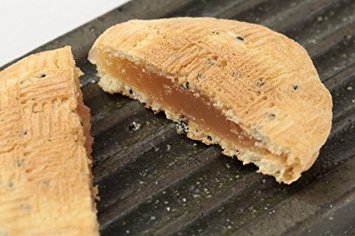
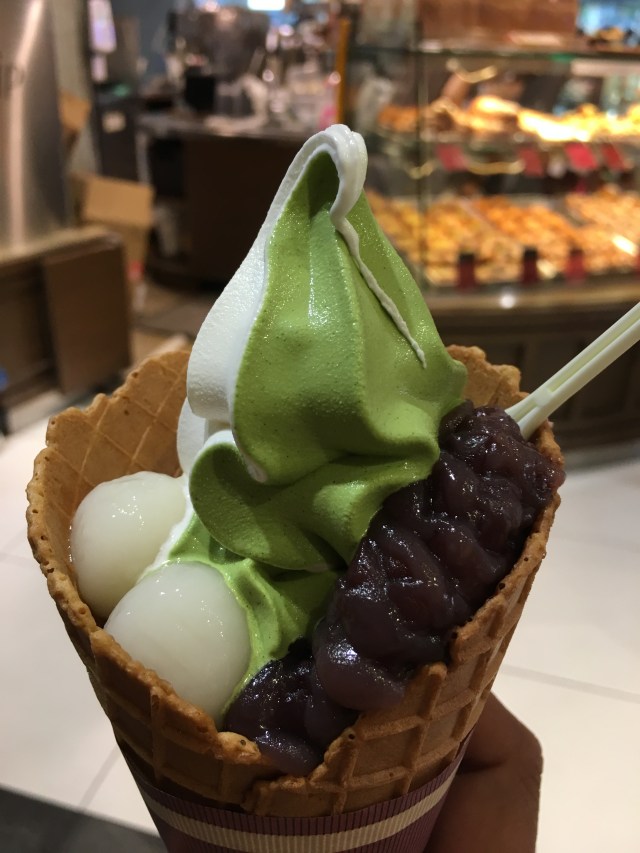
It is not an overestimation to state that Japan is probably the only country that is packed with “food souvenir” stores at every bus station, train station, and airport. You can find shops teeming with people buying goodies to eat early in the morning. It was hard for us to resist the food souvenir stores as we made our way in and out of the train stations every day. The waffle shaped cookies to the crescent shaped sweets, mochi in decadent flavors to the bean cakes and let’s not forget everything matcha. Each morsel and bite a slice of heaven..
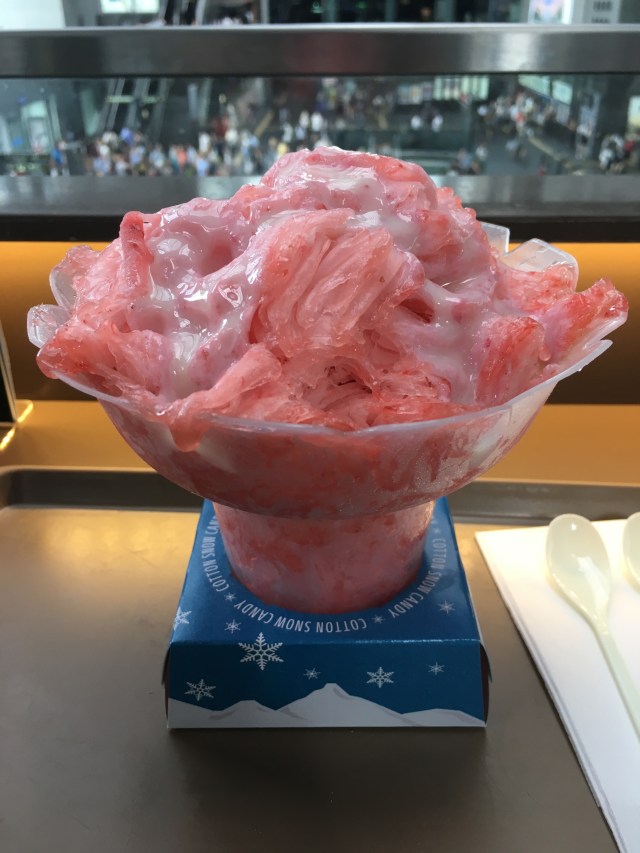
Some of the samples of sweets we tasted throughout our journey..


The hot and humid weather also called for lots of juice stalls, ice-cream and shaved ice kiosks and we did have more than our share of the frozen goodies. It was impossible not to..I made sure I went running just to burn some of the extra calories and make space for some more.
In all the food talk, I don’t want to miss out on Sake, the Japanese Rice Wine. We did come home with a few bottles of Sake. We were told to look for Junmai Ginjo by a Japanese friend so we did. There are several types of Sake in the market such as Ginjo, Junmai, Junmai Daiginjo, Junmai Ginjo, Daiginjo, Honjozo. The Junmai Ginjo is a Sake that is made up of water, koji mold, yeast and rice milled 40% with 60% of each grain remaining. Ginjo is to Sake what single malt is to scotch and considered to be a premium sake. It is not a brand and identifies the sake by category and class. What an education for a complete non-drinker like me, but I did learn how to read the kanji script enough to pick out the Junmai Ginjo Sake bottle from the counter.
Moving from food to the next Japanese obsession! Trains!!

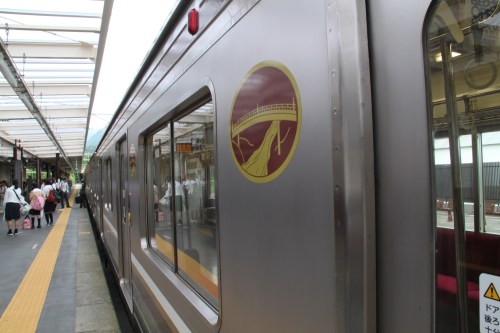
Train travel was interesting in Japan and even though the network of trains is amazing, it can be quite daunting for tourists to navigate the subway system, the private lines, the JR lines, and the Shinkansen. Most travel to tourist destinations involves the use of multiple trains. I found that most people were helpful and would stop to help even though language was a barrier or even if they were rushing to catch the train themselves. One instance was on our second day in Japan and we got on a train in the green car not realizing it was a reserved car. We were using our Japan Rail passes and had bought first class green passes in the US before travel however we got into the wrong car. The ticket conductor came to check the tickets and let us know that we were in the wrong car but asked us to continue sitting in our seats. Even after we got up realizing our mistake, he came back and told us not to. It wasn’t just the conductor, but a woman who spoke English well also came and told us that it was ok and not to get up. We thought it was unbelievably polite for her to do so. Even after two gentlemen came in and had obviously reserved our seats, the conductor gave them different seats. When two other men came and asked my sons to get up, the conductor apologized again and seated the boys himself telling them no one would ask them to move.
A similar incidence took place again when we got on a wrong train by mistake in Tokyo. The ticket conductor guided us and gave us a schedule to go to our destination. Another passenger heard the ticket conductor talk to us and came and informed us that even though the route given by the conductor was correct, the lines were too crowded and asked us to take a different line from a different station. As we got ready to get off the train, the conductor ran to us thinking we were making a mistake and asked us not to get down. We had to reassure the conductor that we knew what we were doing. These two incidences were enough to show the caring and helpful attitude of Japanese people. Why would you worry about tourists otherwise?
There were a few other incidences which impressed us regarding Japanese politeness and courtesy. Other subtle observations were that people would stand in line for trains and buses and would get on in a line no matter how crowded the trains were. Even in the most crowded of situations where the people were packed like sardines in the trains, people remained polite and civil.
Before I left for Japan, I knew it was a safe country. I had read that the chances one could get lost in Japan were much higher than getting mugged and I did get lost a couple times. The word “safe” brought on a completely new meaning when I saw little children of 6-8 years of age walking alone on busy streets, crossing streets, and traveling in trains and buses. Young children around 10-11 years of age traveling at 9.30 pm or 10 pm in school uniforms was a common sight throughout Japan and we even saw young teenage girls traveling alone late at night. At the risk of sounding cynical, this practice would be unheard of in the US or most countries we have been to. I sincerely wish the country remains as is in the years to come and nothing changes for them.
So until I visit again..sayonara..watashitachi wa modotte kimasu
 Take a Chance On Me